
As more companies move from experimenting with AI to deploying it in real workflows, a practical question is becoming increasingly important: Should this be handled by a single AI agent or by multiple agents working together?
That question sits at the center of modern AI architecture. Some workflows are simple, contained, and well-suited to a single agent. Others involve multiple systems, handoffs, approvals, and specialized roles, which makes a multi-agent approach the more natural fit. The difference is not academic. It affects how AI systems scale, how they are governed, and how much real work they can take on.
This is precisely why the conversation around multi-agent vs single-agent AI has become so important. As enterprise AI adoption accelerates, the market is shifting from curiosity about agents to more practical questions about orchestration, governance, and workflow design. CloneForce’s own positioning reflects that same shift: the goal is not just faster task assistance, but persistent digital teammates that can operate across systems and workflows with context, memory, and accountability .
What Single-Agent AI Actually Means
Single-agent AI is exactly what it sounds like: one agent handling a workflow from start to finish. It receives a request, reasons through the task, uses whatever tools it has access to, and produces an output or action. In many cases, that is not only sufficient, but ideal.
The strength of single-agent AI lies in its simplicity. When a task is bounded, relatively linear, and owned by a single function, a capable agent can do the job efficiently. A sales assistant drafting a follow-up email, a support assistant answering a standard product question, or a research agent summarizing a document are all strong examples of single-agent use cases. These workflows do not require much coordination and generally do not benefit from splitting responsibility among several agents.
This is worth emphasizing because the current market often treats multi-agent AI as inherntly more advanced. In practice, the better architecture is the one that fits the work. If one agent can complete the task clearly and reliably, forcing the workflow into a multi-agent design usually adds overhead rather than value.
What Multi-Agent AI Changes
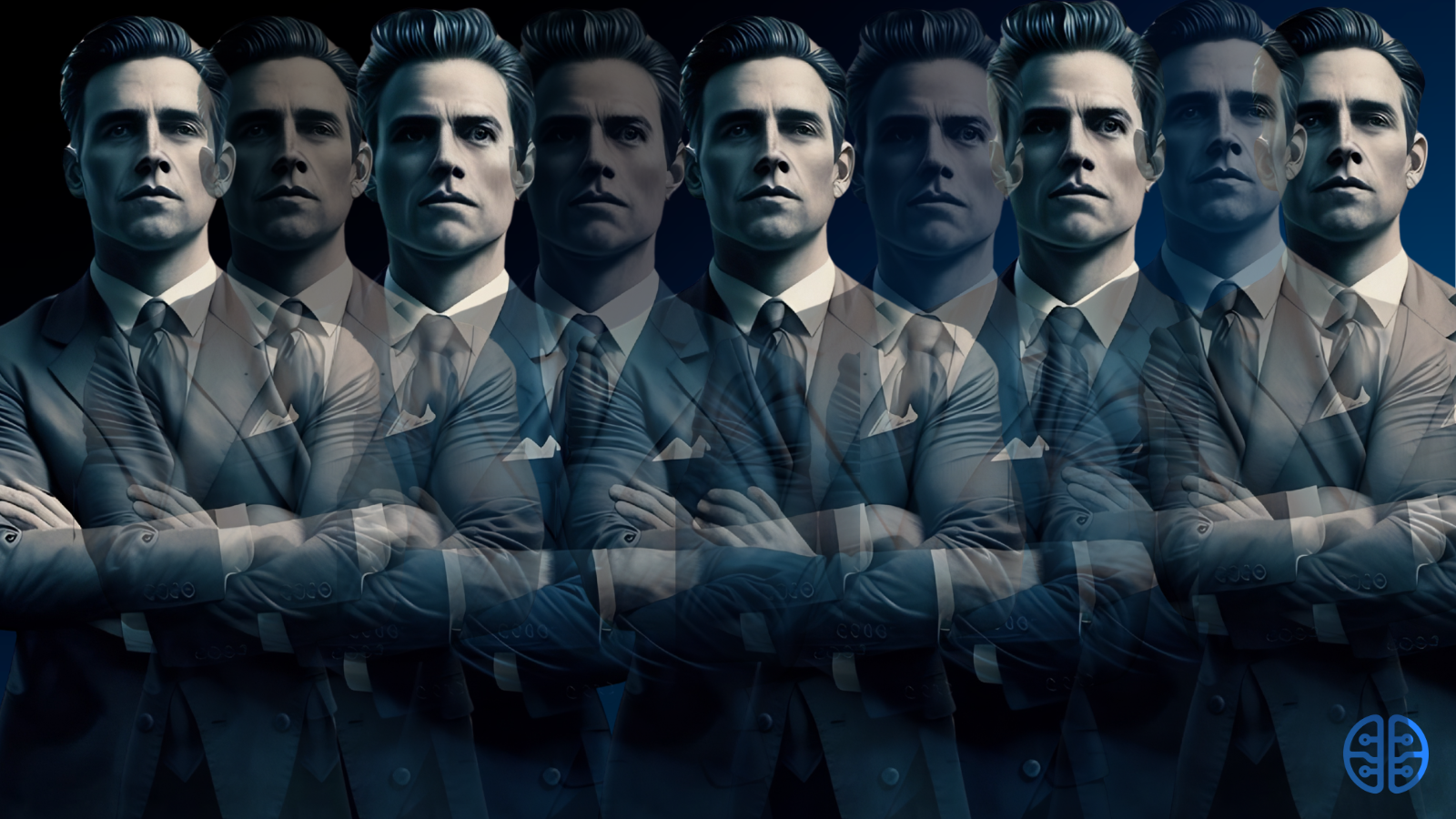
Multi-agent AI changes the model by distributing work across multiple agents rather than concentrating it in one. One agent might plan, another might retrieve or validate information, another might execute actions in a system, and another might communicate status or escalate exceptions. Instead of one agent trying to do everything, the system begins to resemble a team.
This is where the architecture becomes especially relevant to enterprise workflows. The most important work inside large organizations is not a single step performed in isolation. It is a chain of activities moving across systems, people, approvals, and business rules. CloneForce’s own materials describe this as the shift from isolated tools to coordinated digital teammates, where multiple agents share context, operate across functions, and collaborate in ways that mirror high-performing human teams .
It’s also where orchestration becomes the real story. A single model answering a question is not orchestration. Orchestration begins when multiple specialized agents coordinate sequentially or in parallel to advance a larger workflow. In that model, the unit of value is no longer one completed action. It is an end-to-end business outcome achieved with fewer human handoffs along the way .
The Real Difference Between Multi-Agent and Single-Agent AI
The cleanest way to think about the comparison is this: single-agent AI is a single capable worker handling a single stream of work, while multi-agent AI is a coordinated team of specialized workers handling a broader process.
Single-agent systems are usually better when simplicity matters most. They are faster to deploy, easier to govern, and often easier to test. Multi-agent systems become more valuable when the workflow itself is more distributed. The moment work starts crossing systems, departments, or stages of decision-making, a single agent can become a bottleneck. Not because it lacks intelligence, but because the process itself demands coordination.
That distinction matters because buyers are increasingly comparing architectures rather than just features. Our content strategy focuses on comparison pieces and entity-rich educational material that answer practical buyer questions directly and authoritatively. This piece is really part of that broader need: helping buyers understand where task automation ends and where coordinated digital labor begins .
Single-Agent AI vs Multi-Agent AI: Key Differences
Scope of work
Single-agent AI is best for narrow, self-contained tasks. Multi-agent AI is better suited to broader workflows that span systems, teams, or multiple stages of execution.
How work gets done
In a single-agent model, one agent handles the workflow from start to finish. In a multi-agent model, responsibilities are distributed across specialized agents that collaborate to complete a larger outcome.
Complexity
Single-agent AI is simpler to deploy and govern. Multi-agent AI requires more orchestration, but it is often better equipped to handle dynamic, cross-functional workflows.
Governance
Single-agent systems are easier to control at a basic level. Multi-agent systems can provide stronger role-based oversight when different permissions, approvals, or escalation paths are required.
Scalability
Single-agent AI works well until the workflow becomes too broad or fragmented for one agent to manage cleanly. Multi-agent AI scales more naturally when work must be coordinated across multiple systems or responsibilities.
Best-fit outcome
Single-agent AI improves task execution. Multi-agent AI is better for transforming end-to-end workflows.
When Single-Agent AI Is the Smarter Choice
Single-agent AI is usually the better choice when a single role owns the workflow, a single context window is sufficient, and a single toolchain can complete the task with minimal branching. In those cases, the fastest route to value is often the cleanest route to value.
A good example would be a sales rep who needs help after a customer meeting. One agent can review notes, pull out action items, draft a follow-up email, and update the CRM. The workflow is contained, sequential, and easy to evaluate. The same is true for a marketing agent turning transcripts into content drafts or a finance agent categorizing expenses. These are useful applications of AI, but they do not necessarily require coordinated agents.
The mistake many teams make is assuming that complexity equals maturity. In reality, single-agent systems are often the best starting point because they allow organizations to establish trust, refine prompts and controls, and demonstrate value before moving to broader orchestration.
When Multi-Agent AI Becomes the Better Architecture
Multi-agent AI starts to make sense when the workflow resembles team-based execution rather than a self-contained task. That usually happens when work crosses departments, when approvals or handoffs are involved, or when multiple tools and permissions have to be coordinated in sequence.
Employee onboarding is a classic example. What looks like a single process on paper is actually a chain of responsibilities spanning HR, IT, finance, security, and the hiring manager. A procurement workflow behaves the same way. A request may trigger budget review, vendor verification, compliance checks, approval routing, and status communications across multiple systems. Trying to force all of that through one agent often creates a brittle system.
Breaking those responsibilities into specialized agents produces a more resilient design.
CloneForce’s own narrative examples map directly to this pattern. The playbooks describe vertical orchestration, where a lead agent decomposes work into subordinate operators, and horizontal collaboration, where peer agents across departments coordinate to resolve workflows such as onboarding or device replacement.
That framing is central to how CloneForce differentiates itself: not as a prompt-driven assistant, but as orchestration infrastructure for digital teammates working together across the business
Practical Examples Make the Difference Clear
The easiest way to understand the architecture decision is to look at the shape of the work.
A single-agent use case might be sales follow-up. One agent can summarize the meeting, draft the email, update the opportunity, and create the next reminder. That is clean and bounded.
A multi-agent use case might be employee onboarding. One agent handles HR documentation, another provisions systems and hardware, another initiates payroll workflows, and another coordinates milestones with the manager. At that point, the work is no longer one task. It is an operating process.
The same pattern shows up in procurement, revenue operations, and support escalation. A procurement workflow may require one agent to intake the request, another to validate vendor data, another to run compliance checks, and another to manage approvals and updates. A RevOps workflow may split across research, CRM updates, outreach preparation, analytics, and managerial review. These examples help explain why multi-agent systems are increasingly seen as infrastructure, not just tooling. They handle the kinds of complexity that simpler assistants structurally cannot.
The Tradeoff Is Not Basic vs Advanced
One of the biggest misconceptions in this category is that the comparison is basic versus sophisticated. It is not. The real tradeoff is simplicity versus orchestration.
Single-agent AI is easier to deploy, monitor, and govern. Multi-agent AI creates room for specialization, adaptability, and more deliberate control over who does what inside the system. In enterprise environments, this can improve governance by separating responsibilities, permissions, and escalation paths more clearly. CloneForce positions itself around that point, highlighting governed accountability, scoped permissions, and audit-ready execution as critical parts of enterprise trust.
At the same time, multi-agent systems introduce more design overhead. Shared context has to be managed. Routing rules have to be thought through. Performance has to be monitored. Exceptions have to be handled cleanly. That complexity is worth it only when the workflow genuinely requires coordinated execution.
How to Decide Which Architecture Fits
The most useful question is not, “Which one is better?” It is, “What does the workflow actually look like in the real world?”
If the work looks like a single person doing a single job, start with single-agent AI. If the work looks like a team coordinating across systems, approvals, and responsibilities, move toward multi-agent AI.
That framing is especially important for enterprise buyers because risk calculus shapes every decision. The first questions are rarely about novelty. They are about control, scalability, and fit. Can we govern this? Can it grow with us? Can it handle the messiness of real workflows without becoming impossible to manage? CloneForce’s orchestration narrative is designed to answer exactly those concerns by placing governance and scalability alongside technical power, not after the fact.
Why This Matters Right Now
This distinction matters now because AI adoption is moving from the pilot phase into production infrastructure. The broader CloneForce materials cite forecasts that a meaningful share of enterprise applications and workflows will embed agentic systems over the next several years, while knowledge-work productivity gains are increasingly tied to orchestrated, domain-tuned AI rather than isolated assistants.
That shift raises the stakes of the architecture decision. A team that overengineers a narrow workflow wastes time and creates unnecessary complexity. A team that under-architects a cross-functional workflow may prove that AI works in a demo while failing in production. The architecture has to match the operating reality of the work.
Why CloneForce Fits the Multi-Agent Future
CloneForce is built around the idea that enterprise AI should behave less like a disconnected tool and more like a digital teammate embedded in the flow of work. That means identity, memory, skills, governed execution, and the ability for multiple agents to collaborate across channels and systems.
The company’s investor and messaging materials repeatedly reinforce that CloneForce is not a single assistant. It is a scalable workforce ecosystem, where Clones can work together and with human teams to produce measurable business outcomes .
AI should behave less like a disconnected tool and more like a digital teammate embedded in the flow of work.
-
That is why this comparison matters strategically for CloneForce. For simple tasks, one agent may be enough. But for high-value enterprise workflows, the future increasingly belongs to coordinated digital teammates that can decompose work, share context, and execute with governance across the business. That is the move from assistance to execution, and from tooling to infrastructure.
Single-agent AI is often the right place to start. It is practical, efficient, and well suited to contained workflows where one capable agent can do the job cleanly.
But as work becomes more dynamic, cross-functional, and system-dependent, multi-agent AI becomes a better architecture. Not because it sounds more advanced, but because it maps more accurately to how real enterprise work actually gets done.
That is the real answer to the multi-agent vs single-agent AI question. The best model is the one that fits the work. And increasingly, the most important work inside the enterprise looks less like an isolated task and more like coordinated team execution.
Want to see what coordinated digital teammates look like in practice? Book a demo and explore how CloneForce helps enterprises move from isolated AI tools to orchestrated AI execution.





